
Bathroom feature lighting: what you can actually use
You know when you walk into a bathroom and it just feels better, even if you can't quite explain why?
The lighting is soft but clear. The mirror works. There's no harsh glare. And the whole space feels easy to use and spend time in. A feature light is usually the reason why. It is the first thing you notice when you walk in, and it quietly shapes how the room feels without thinking too much about it.
Then you come home… and it’s a single ceiling light doing all the work. That’s where bathroom feature lighting comes in, but bathrooms come with rules. Water, steam, and safety standards mean you cannot just install anything anywhere.
Once you understand what works and where, it becomes much easier to get that same balanced, well-lit feel at home.
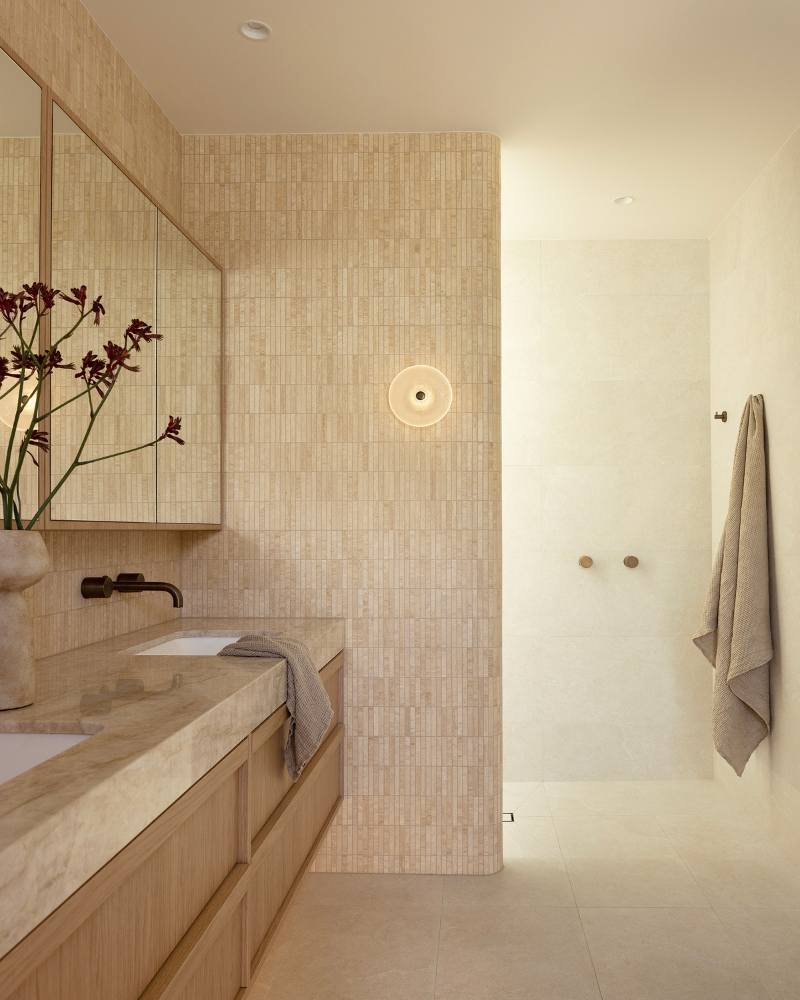
What is a feature light?
A feature light is the one you notice first when you walk into the room and it does more than just light the space. It helps shape how the room feels.
Instead of relying on one overhead light to do everything, a feature light gives the room a focal point. It might sit beside your mirror, hang near your vanity, or draw attention to a freestanding bath.
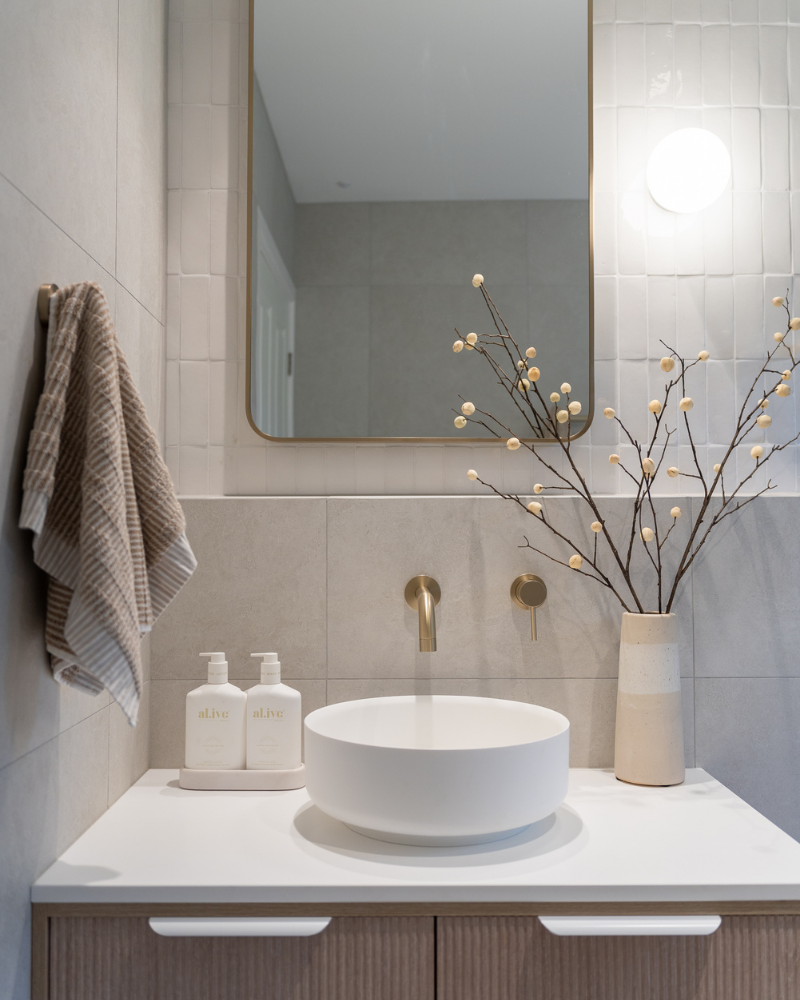
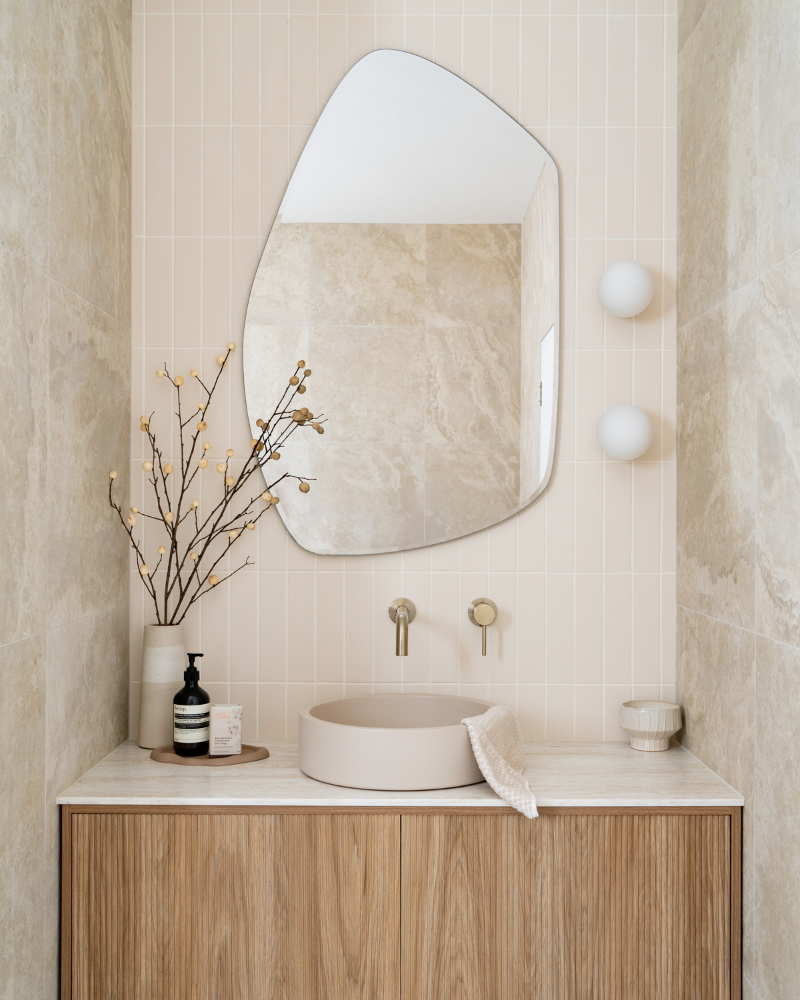
You will usually see it placed where your eye naturally lands, around the vanity is the most common spot, especially when using a bathroom vanity light or a pair of wall lights to frame the mirror. In larger bathrooms, a pendant light placed near or above the bath can create the same effect.
It is a small shift, but it completely changes how the space comes together.
Where can you put a feature light in a bathroom?
This is where most people hesitate, but it is simpler than it seems.
You can absolutely use feature lighting in a bathroom. You just need to think about how close it is to water and choose the right IP rating. In areas like above your vanity, beside your mirror, or on the ceiling away from the shower, you have the most flexibility. This is where most feature lighting sits, and where options like wall lights, pendants, and ceiling lights work best.
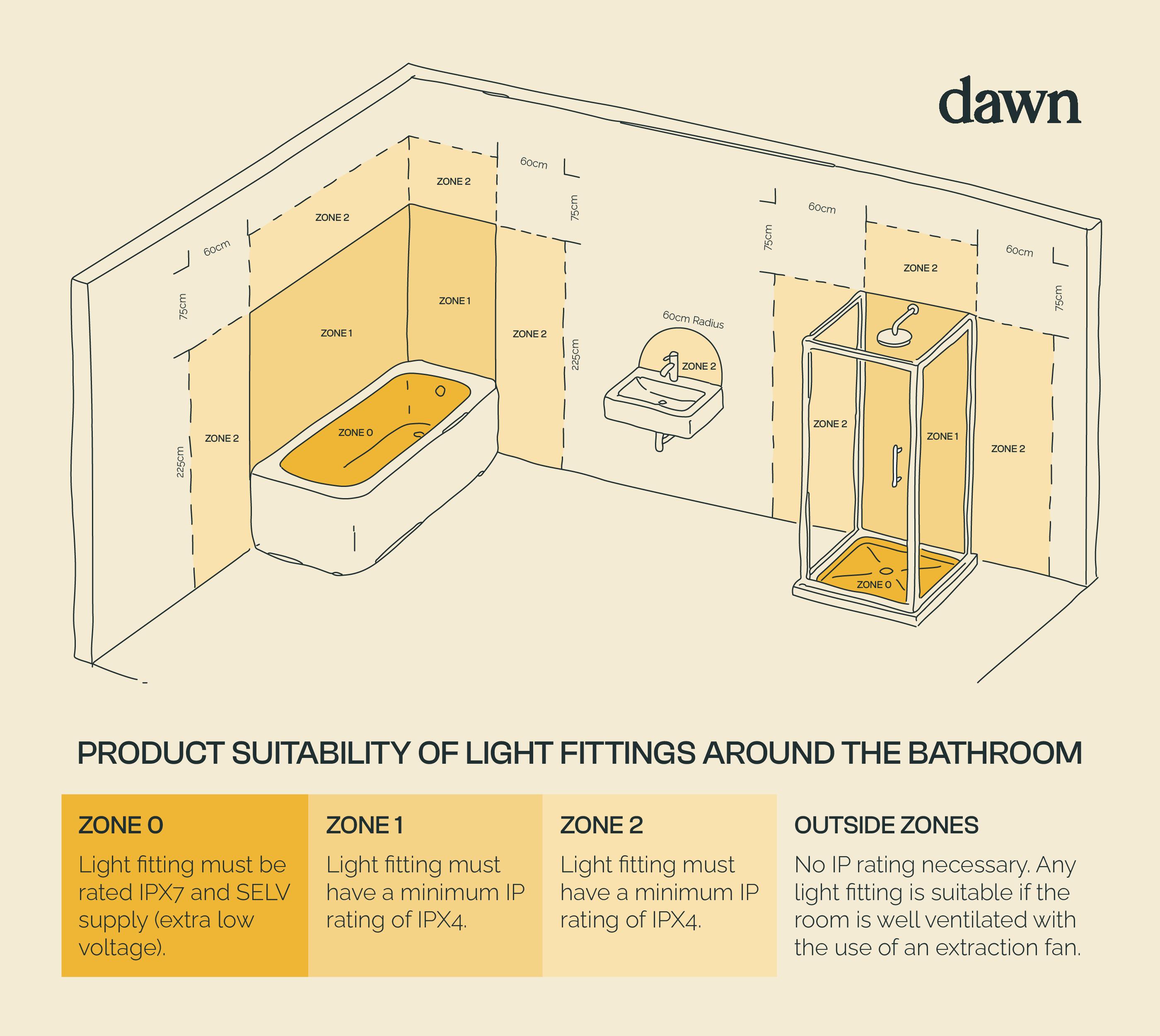
As you move closer to water, like near a bath or just outside a shower, your lighting needs to handle moisture. This is where fittings with at least an IP44 rating come in, with higher ratings offering extra protection. Inside the shower or directly above a bath, the requirements are much stricter. These areas need specialised, high-rated, low-voltage fittings, which means they are generally not suited to decorative feature lighting.
As a general rule, the closer the light is to water, the higher the IP rating should be.
What fixtures can you use?
You have more options than most people expect. The key is choosing the right fitting for the right spot.
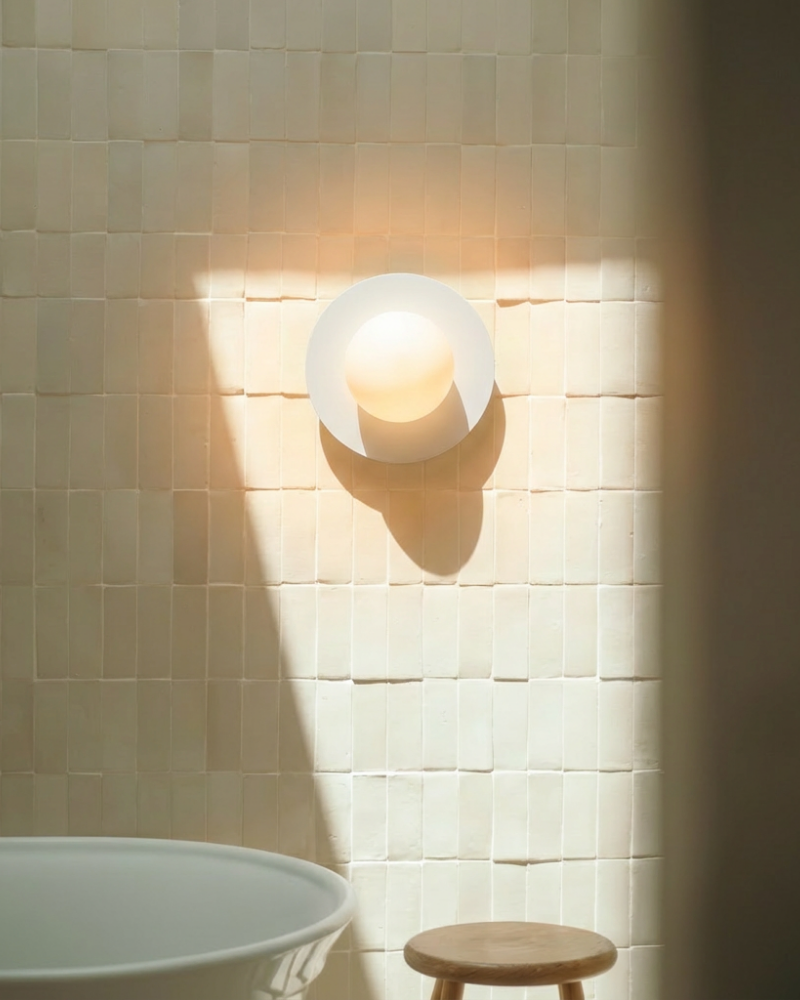
Wall lights are often the easiest place to start. They sit away from direct water exposure and give you soft, even light around the mirror, which makes everyday use feel more comfortable. You avoid harsh shadows, and the space immediately feels more balanced. If you are looking for a reliable starting point, explore options here.
Pendant lights bring in that layered look you often see in well-designed bathrooms. They work best beside a mirror instead of above it, or as a feature light above a freestanding bath. In larger bathrooms, they help break up empty vertical space and add interest without clutter. The key is getting the height and placement right. You can explore styles here.
If you are working with a smaller bathroom or lower ceilings, a ceiling light can still act as a feature without taking up visual space. Choosing something with a bit of shape or texture gives you that elevated feel without overwhelming the room.
What you can’t use — and why
It’s easy to choose lighting based on looks alone, but bathrooms need a bit more thought. If a light is not designed to handle moisture, it will not hold up over time. Steam can build up inside fittings, finishes can wear down faster, and in some cases, it can become a safety issue. Lights without an IP rating, open fittings that allow water in, or materials that are not suited to humid environments are to be avoided, especially anywhere near wet zones.
IP ratings explained
IP rating tells you how well a light can handle water exposure.
Bathrooms are divided into zones based on how close they are to water, and each zone has a minimum requirement. In most bathroom areas, like around your vanity or mirror, lights need to be rated for water splashes. This is where IP44 fittings are commonly used, as they meet the minimum requirement for these zones.
As you move closer to water, such as directly above a shower or bath, the requirements stay at a minimum of splash resistance, but choosing a higher rating like IP65 gives you added protection and peace of mind.
Inside the shower or bath itself, the rules are much stricter. These areas require fittings with very high water resistance and low voltage, which is why feature lighting is typically not used there. In areas further away from water, you have more flexibility. If the space is well ventilated, decorative lighting can be used without needing a high IP rating.
How to choose the right size
With pendant lights, the scale should relate to what sits below them. A smaller vanity suits a more compact pendant or a pair of slim fittings, while a larger vanity can handle something with more presence. Above a freestanding bath, the pendant should feel centred and proportional, not oversized or hanging too low.
Wall lights should sit comfortably at or just above eye level and align naturally with your mirror. In narrower bathrooms, choosing a fitting that doesn’t extend too far out helps keep the space functional and easy to move through.
Ceiling lights are generally more forgiving, but the same principle applies. Smaller spaces benefit from compact fittings, while larger bathrooms give you more freedom to go slightly bolder.
Good lighting is not just about visibility. It is about how your bathroom feels when you use it. Feature lighting is what takes your space from purely functional to somewhere you actually enjoy spending time. Once you understand placement, IP ratings, and scale, the rest becomes much easier.
Start with one decision. Where do you want your eye to land when you walk in? Build from there.

Layla is a creative at heart, with an Advanced Diploma in Interior Design and being the Senior Marketing and Ecommerce Coordinator here at Yabby she has a passion for staying up to date with the latest trends within the industry. Known for going down a rabbit hole on Pinterest and being a sucker for a good mood board to kick off any project.