
How to Light a Kitchen Island Bench
The kitchen island does more than provide extra bench space. It's where meals are prepared, homework gets finished, friends gather over drinks and family naturally comes together at the end of the day. Because it serves so many different purposes, the lighting needs to be just as considered as every other element in your kitchen.
Choosing the right kitchen island lighting is about more than finding a pendant you like. Good lighting balances practical task lighting with a welcoming atmosphere, creating a space that's comfortable to cook in while still feeling inviting when family and friends gather around the island.
From choosing the right kitchen island pendant lights to working out the ideal height, spacing and LED globes, a little planning goes a long way. Making these decisions before electrical rough in helps your electrician position every fitting correctly from the start, giving you a kitchen that's both practical and beautifully considered.
In this guide, we'll cover everything you need to know about how to light a kitchen island bench, including pendant sizing, spacing, layered kitchen lighting and practical tips to help you create a kitchen that's functional, comfortable and designed to suit the way you live.
What Is the Best Way to Light a Kitchen Island Bench?
The best lighting for a kitchen island balances function with style. Pendant lights create a focal point above the bench while providing useful light for preparing meals, serving food and entertaining, but they should never work in isolation.
Instead, think about your lighting in layers. Pendants provide direct light over the island, while downlights spread light more evenly across the rest of the kitchen, reducing shadows and making the room more comfortable to use throughout the day. One of the most common mistakes is choosing pendants based on appearance alone. Incorrect sizing, poor spacing or hanging them too low can affect both the look of the kitchen and how comfortable it is to use, which is why it's worth planning the scale, layout and placement before installation begins.
Choose Pendant Lights That Suit Your Kitchen
Your pendant lights should feel like a natural part of the kitchen, complementing your cabinetry, benchtops, tapware and hardware rather than competing with them. While they often become a feature above the island, they should still feel connected to the overall design of the space.
The size of your island will usually determine whether one statement pendant or multiple fittings will work best. A compact island may only need a single pendant, while a longer bench often looks more balanced with two or three pendants spaced evenly across its length. Getting the scale right is just as important. Pendants that are too small can feel lost over a large island, while oversized fittings may make the space feel heavier than it needs to.
When choosing a finish, think about the overall style of your kitchen. Whether you're creating a Modern Coastal, Mediterranean or contemporary space, choose pendants that complement your cabinetry, benchtops and tapware to help tie the whole design together.
Explore our range of Kitchen Pendant Lights to compare different shapes, sizes and finishes.
How High Should Kitchen Island Pendants Hang?
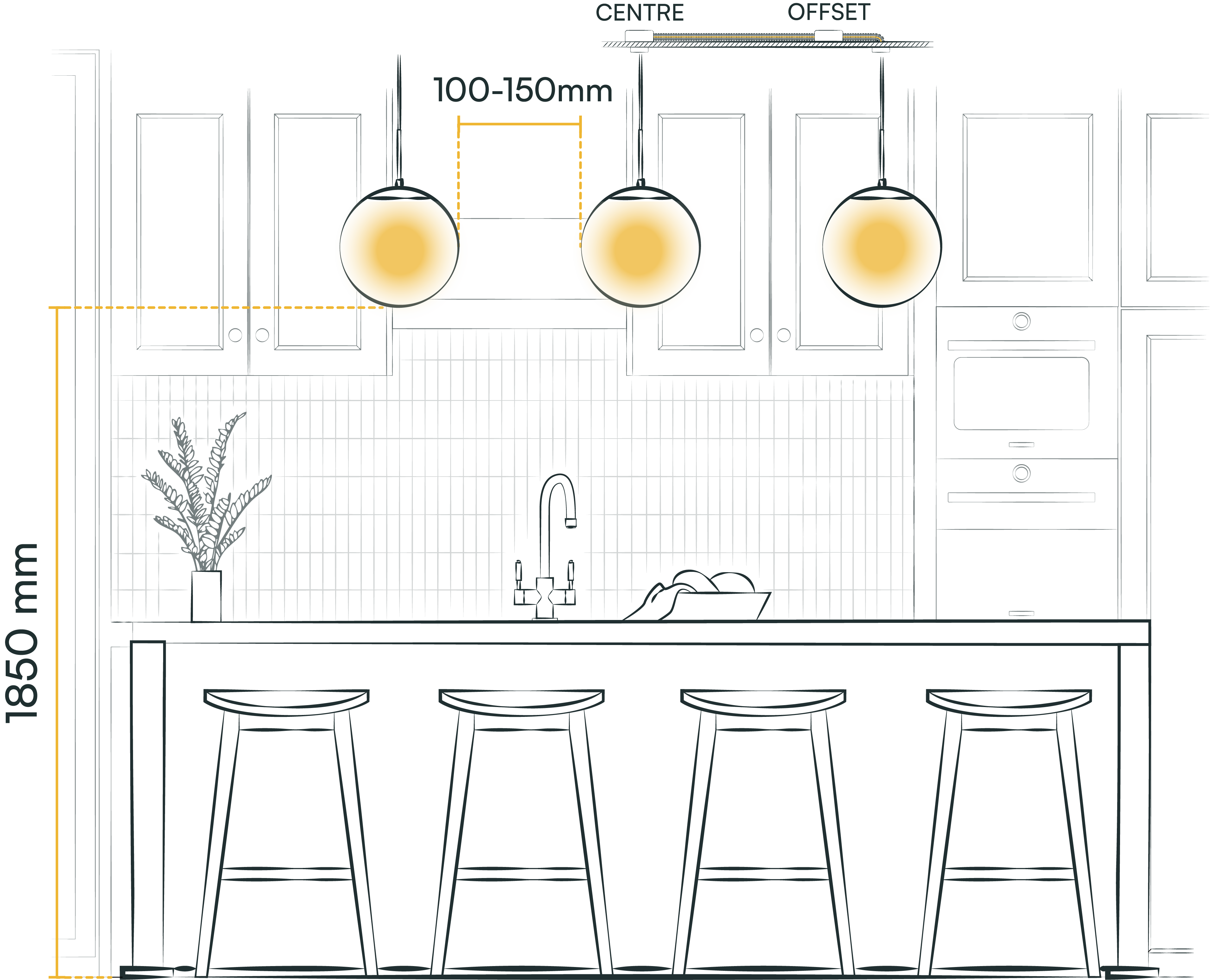
Getting the kitchen pendant height right affects both the appearance of your kitchen and how comfortable it is to use every day. As a general guide, the bottom of the pendant should sit approximately 75 to 90cm above the benchtop, which typically equates to around 1850mm from the finished floor level in a standard kitchen. This provides comfortable clearance while positioning the light where it's most effective over the work surface.
If a pendant sits near an open walkway, allow at least 2.1m clearance underneath so people can move safely through the space. Ceiling height and pendant size should also be considered, as larger fittings often need to sit slightly higher while smaller pendants can usually hang a little lower without interrupting the room.
Before the installation is finalised, stand back and look at the pendants from different areas of the kitchen and adjoining living spaces. A small adjustment in height can make a noticeable difference to both the sightlines and the overall balance of the room.
How Many Pendant Lights Do You Need?
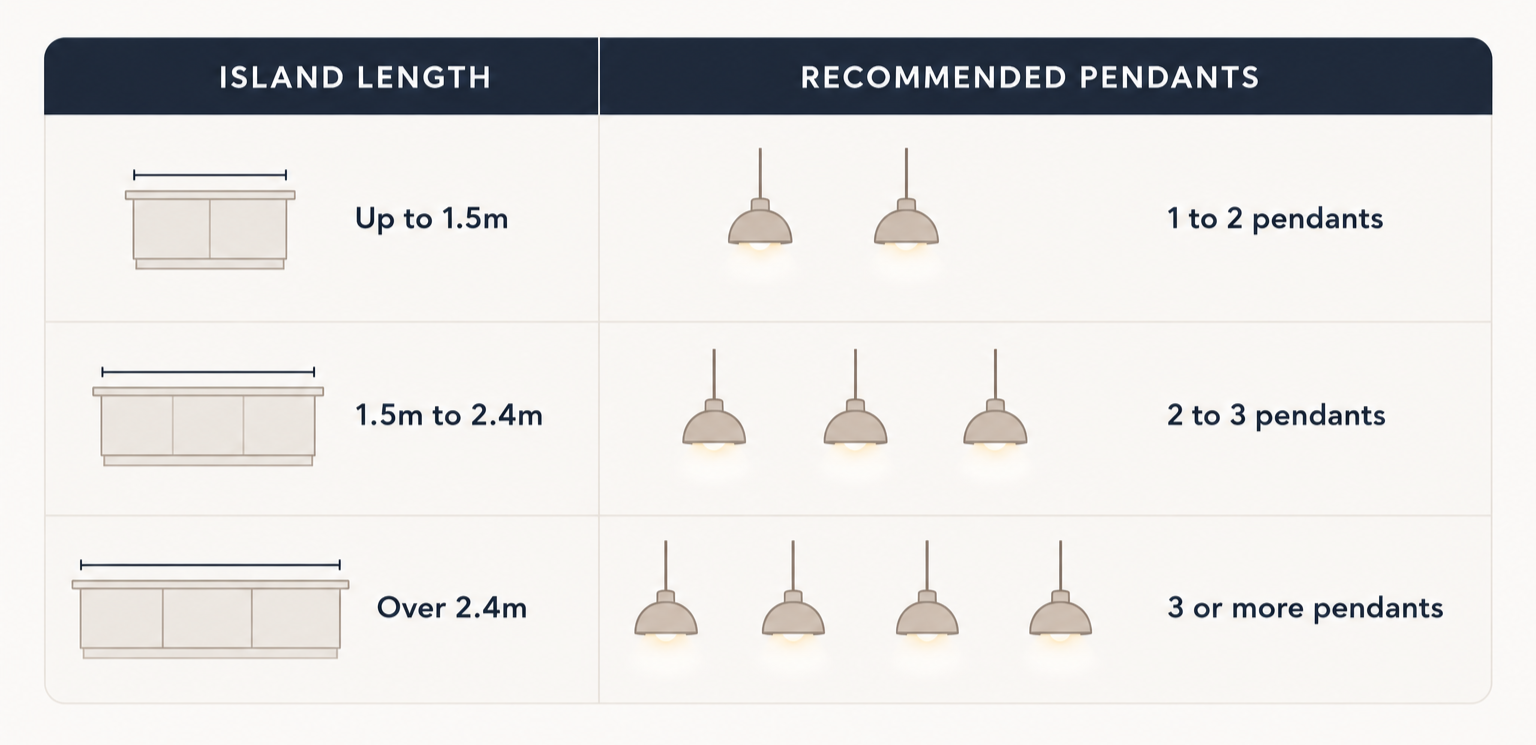
When planning pendant lights over a kitchen island, the length of your bench is the best place to start.
These recommendations are a useful starting point, but the size of your pendants also plays an important role. Larger fittings naturally require more spacing, while smaller pendants can sit closer together without feeling crowded. As a guide, aim to space pendants approximately 60 to 80cm apart, then adjust the layout based on the diameter of each fitting and the length of your island.
Odd numbers often create a more balanced look, particularly over a rectangular island, although two larger pendants can work equally well over a medium sized bench. Whatever layout you choose, centre the lighting over the island itself rather than aligning it with an inset sink or cooktop. This helps reinforce the island as the focal point of the kitchen and creates a layout that feels intentional from every angle.
Before your electrician begins installation, it's worth marking the pendant positions above the island so you can check the spacing, proportions and sightlines while adjustments are still easy to make.
Layer Your Kitchen Lighting
Pendant lights create a feature above the island, but they won't evenly light the entire benchtop on their own. Each fitting creates a pool of light directly below it, which can leave darker areas between or around the pendants. Pairing pendants with LED Downlights helps spread light more evenly across the benchtop, reducing shadows and making the full width of the island more comfortable to use.
For homes with a concrete ceiling, Surface Mounted Downlights are a practical alternative to recessed fittings. They sit directly against the ceiling and provide the same general coverage without requiring a ceiling cutout. If your island sits alongside the main preparation area, under cabinet LED strip lighting is another valuable layer, lighting the benchtop directly and reducing the shadows that ceiling lighting can create when you lean over it.
To get the most from your lighting, place pendant lights and downlights on separate circuits with their own switches so each layer can be controlled independently. Bright downlights are ideal for food preparation, while pendants on their own create a more relaxed setting for dinner or entertaining. Adding dimmers gives you even more flexibility, making it easy to switch from bright task lighting while cooking to a softer setting when it's time to entertain.
Choosing the Right LED Globe
Choosing the right LED globe is just as important as choosing the right fitting. Colour temperature influences how your kitchen feels and how comfortable it is to work in, so it's worth considering how you use the space throughout the day.
As a general guide, 3000K works well for the overall room, creating a warm white light that feels comfortable from morning through to the evening. For task lighting over food preparation areas, 4000K is often the better choice. It provides a cleaner, more neutral light that makes it easier to see food, benchtops and cabinetry finishes clearly.
Choosing dimmable LED globes makes it easy to adjust the lighting throughout the day, from brighter light while preparing meals to a softer setting when family and friends gather around the island.
Browse our range of LED Globes to compare colour temperatures, brightness and dimming options.
Plan Your Kitchen Lighting Before Electrical Rough In
One of the biggest kitchen lighting mistakes is leaving pendant selection until after electrical rough in. Choosing your pendants early allows your electrician to position the wiring around the exact fitting you've selected, rather than working from a placeholder that may require changes later.
It also gives you time to fine tune the layout, check spacing over the island and make sure everything is positioned exactly where you want it before installation begins. A little planning at this stage can save time, avoid unnecessary adjustments and help your finished kitchen look considered from every angle.
Once you've chosen your lighting, a licensed electrician can confirm the final positioning, switching, dimmer compatibility and any required clearances before installation begins.
Bring Your Kitchen Lighting Plan Together
Great kitchen island lighting starts with good planning. Choosing the right pendant is only part of the process. Height, spacing, layered lighting and the right LED globes all play a role in creating a kitchen that's practical to cook in and welcoming to gather around.
By making these decisions before electrical rough in, you'll give your electrician everything they need to position each fitting correctly from the start. The result is a kitchen that's not only well lit, but one that works beautifully for everything from busy weekday mornings to relaxed evenings with family and friends.
Explore Dawn Lighting's range of pendant lights, downlights, surface mounted fittings and LED globes to find everything you need to complete your kitchen lighting plan.

Layla is a creative at heart, with an Advanced Diploma in Interior Design and being the Senior Marketing and Ecommerce Coordinator here at Yabby she has a passion for staying up to date with the latest trends within the industry. Known for going down a rabbit hole on Pinterest and being a sucker for a good mood board to kick off any project.