
How Many Downlights Do I Need in Each Room?
If you're wondering how many downlights per room you need, here's the answer we think is more useful: there isn't a magic number.
And that's a good thing.
Every home has its own lighting recipe. Your layout, furniture, ceiling height, finishes and, most importantly, the way you use each room will influence where light belongs. So rather than starting with the ceiling and asking how many downlights will fit, start with the room.
Where will you prepare food? Where will you sit with a book? Where will you get ready in the morning? Is there a beautiful stone wall, piece of artwork or run of joinery you'd love to see after dark? Those are the things worth thinking about first. Downlights can absolutely be part of a great lighting plan. They just don't need to do all the work.
Start with the room, not the ceiling
Think about what's happening underneath the ceiling before deciding what goes into it.
A kitchen needs clear light where you're chopping, cooking and cleaning. A dining table might call for something softer. In the living room, a lamp beside the sofa could provide the light you need for reading, while a carefully positioned downlight brings artwork or a textured wall to life.
Each of these areas has a different job, so it makes sense that the lighting responds differently too. Rather than looking for somewhere to place the next downlight, think about where light will actually make a difference.
It's a simple shift in thinking, but it can completely change how a home feels after dark.
Build your lighting in layers
A considered lighting plan usually comes together through layers.
Ambient lighting provides comfortable overall illumination.
Task lighting gives you useful light where you're cooking, reading, working or getting ready.
Accent lighting brings attention to artwork, stone, timber, shelving and architectural details.
Downlights can work across these layers, but the type of downlight matters. Adjustable, anti glare, pinhole and diffused fittings can all create different effects. We explore these options further in the different types of downlights explained.
Layering also gives you flexibility throughout the day and evening.
The light you need while preparing dinner isn't necessarily the light you want once everyone is sitting around the table. Task lighting can switch off while a pendant, wall light or lamp creates a softer atmosphere.
Same room. A completely different feeling.
What about downlight spacing?
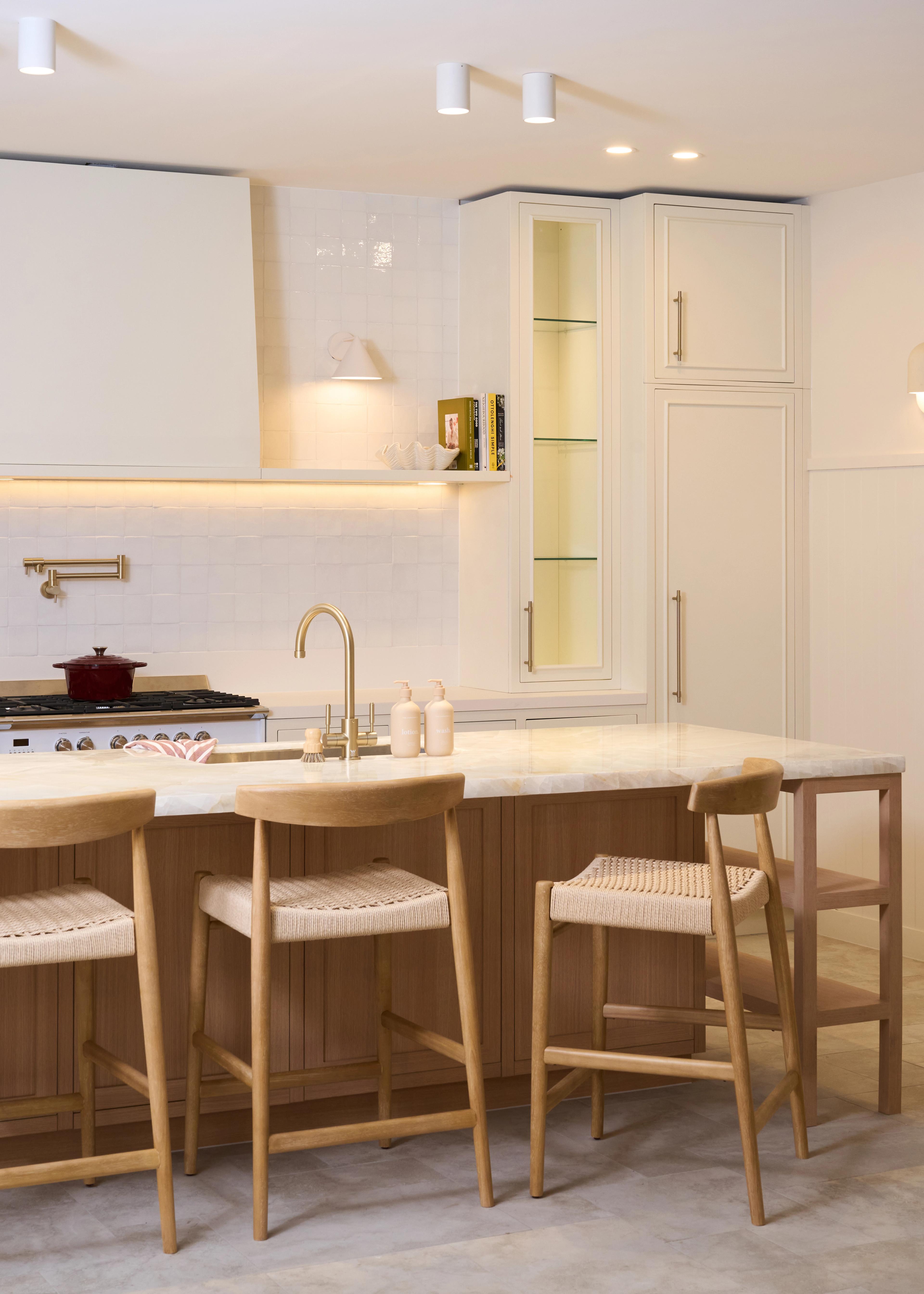
We get asked about downlight spacing a lot. How far apart should downlights be? Is there a standard distance between downlights?
Traditionally, a rule of thumb was to place downlights approximately two metres apart in homes with standard ceiling heights. It's a guide you'll still come across, but today we're thinking about lighting differently. Rather than starting with a measurement and repeating it across the ceiling, placement can respond to what's actually happening within the room.
A kitchen work surface might need focused light in a particular position. An artwork may call for an adjustable downlight. A stone wall can come alive when light catches its texture. Somewhere else, a floor lamp or wall light might provide everything that part of the room needs. Ceiling height, beam angle and light output will also influence where a downlight belongs. This means the spacing between fittings may change throughout the same home.
If you're at the very beginning of planning and simply need something to reference, that traditional two metre rule can provide a rough sense of scale on a standard height ceiling. But treat it as a guide, not the starting point for your design.
Look at the room first. The placement should make sense for what's happening below.
How does lighting change from room to room?
Each room asks something different from its lighting.
Here's what we'd think about first.
Kitchen
Start with your work surfaces.
Benchtops, sinks, cooktops and preparation areas need clear, useful light. That means the distance between downlights in a kitchen can respond to where those areas sit rather than being determined by equal spacing.
Then think about what else is happening in the room.
Pendants can define an island and create another layer of light. Integrated lighting can illuminate joinery. A beautiful splashback or stone surface might deserve some attention after dark.
Our guides to how to light a kitchen island bench and modern kitchen lighting ideas explore these options further.

Bedroom
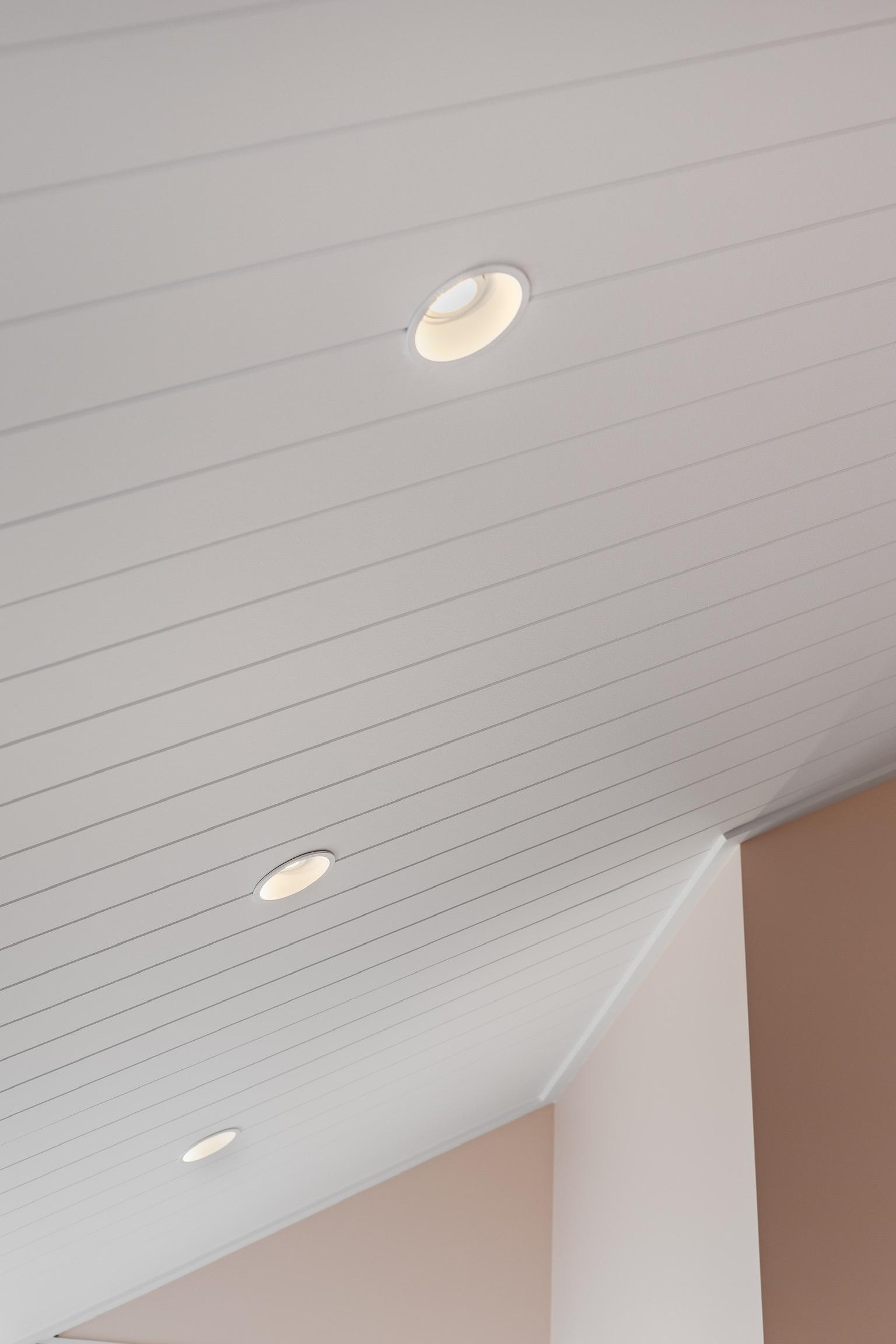
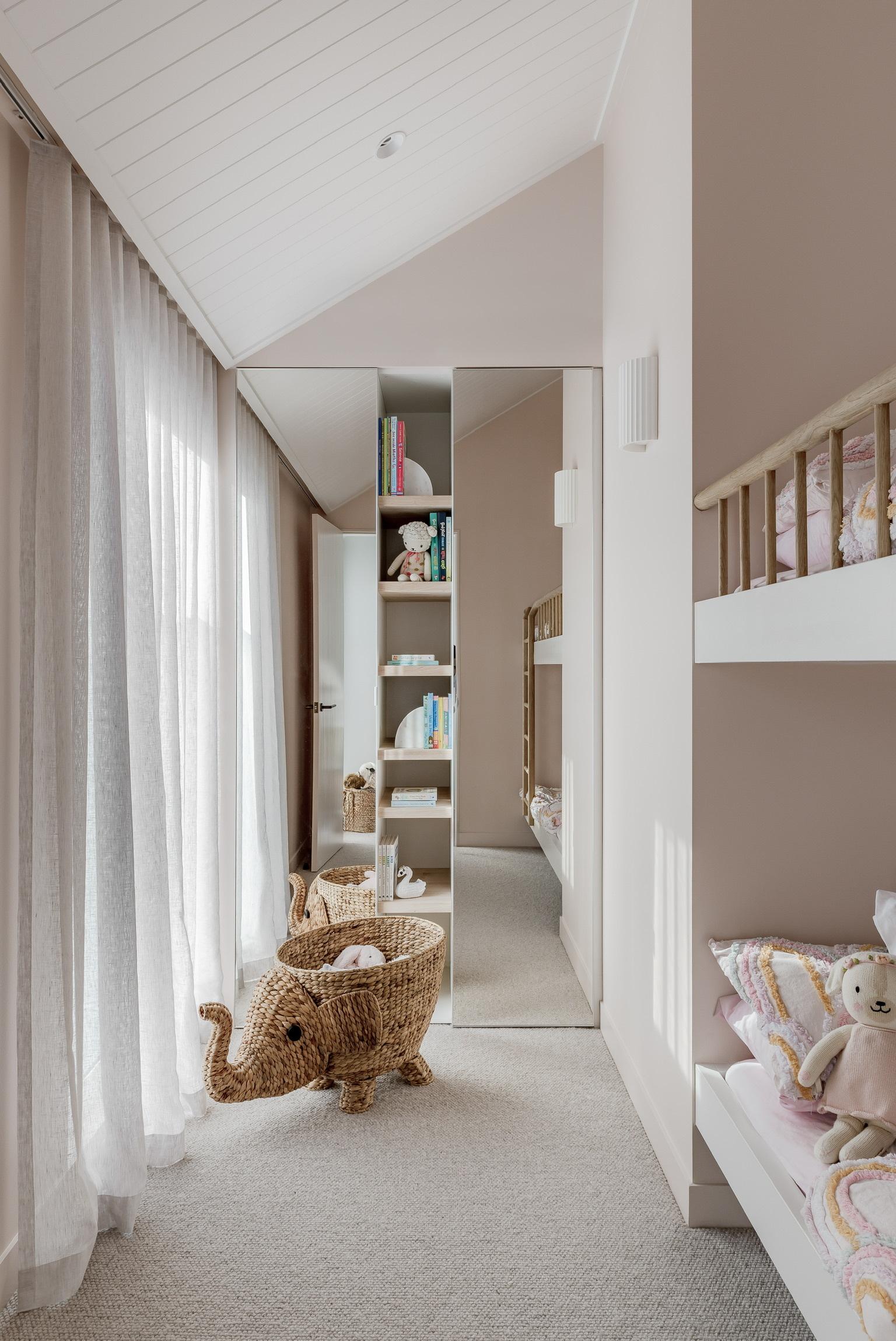
If you're asking how many downlights in a bedroom you need, think first about how you want the room to feel at night. Bedrooms often benefit from softer layers. Bedside lamps, wall lights and low level lighting can create a comfortable evening atmosphere without relying entirely on overhead light. Downlights can then complement those layers where they're useful.
It also gives you more control over the mood of the room. Getting dressed in the morning and winding down before bed are two very different moments, and your lighting can respond accordingly.
Living and dining
Living and dining spaces often need to adapt throughout the evening. You might want to highlight artwork, bring out the texture of a wall, illuminate a dining table or create a comfortable pool of light beside the sofa. Dinner with friends may call for one combination. Settling in to watch a movie may call for another.
This is where a mix of downlights, pendants, wall lights and lamps can give you far more flexibility than relying on one source of light. Explore our living room ceiling light ideas and modern ceiling lights for more ways to layer these spaces.
Bathroom
Bathroom lighting has several jobs to solve.
There's the practical light you need around the mirror and vanity, comfortable general illumination and the need to select fittings suitable for wet areas. Thinking about these needs separately can create a much better result than asking one type of fitting to do everything.
Choose the right downlight for the job
Once you understand where a downlight is useful, you can choose the fitting that will create the right effect.
Beam angle determines how broadly or narrowly the light spreads. Adjustable downlights can direct light towards artwork, work surfaces and architectural details. Anti glare designs can reduce direct glare, while diffused downlights can provide broader general illumination.
Colour temperature changes the feeling too. Warmer light can create a softer atmosphere, while some task areas may benefit from clearer illumination.
Our guide to warm white vs cool white lighting explains what to consider.
You can also explore our collection of modern downlights to see the different options available.
Think about your lighting early
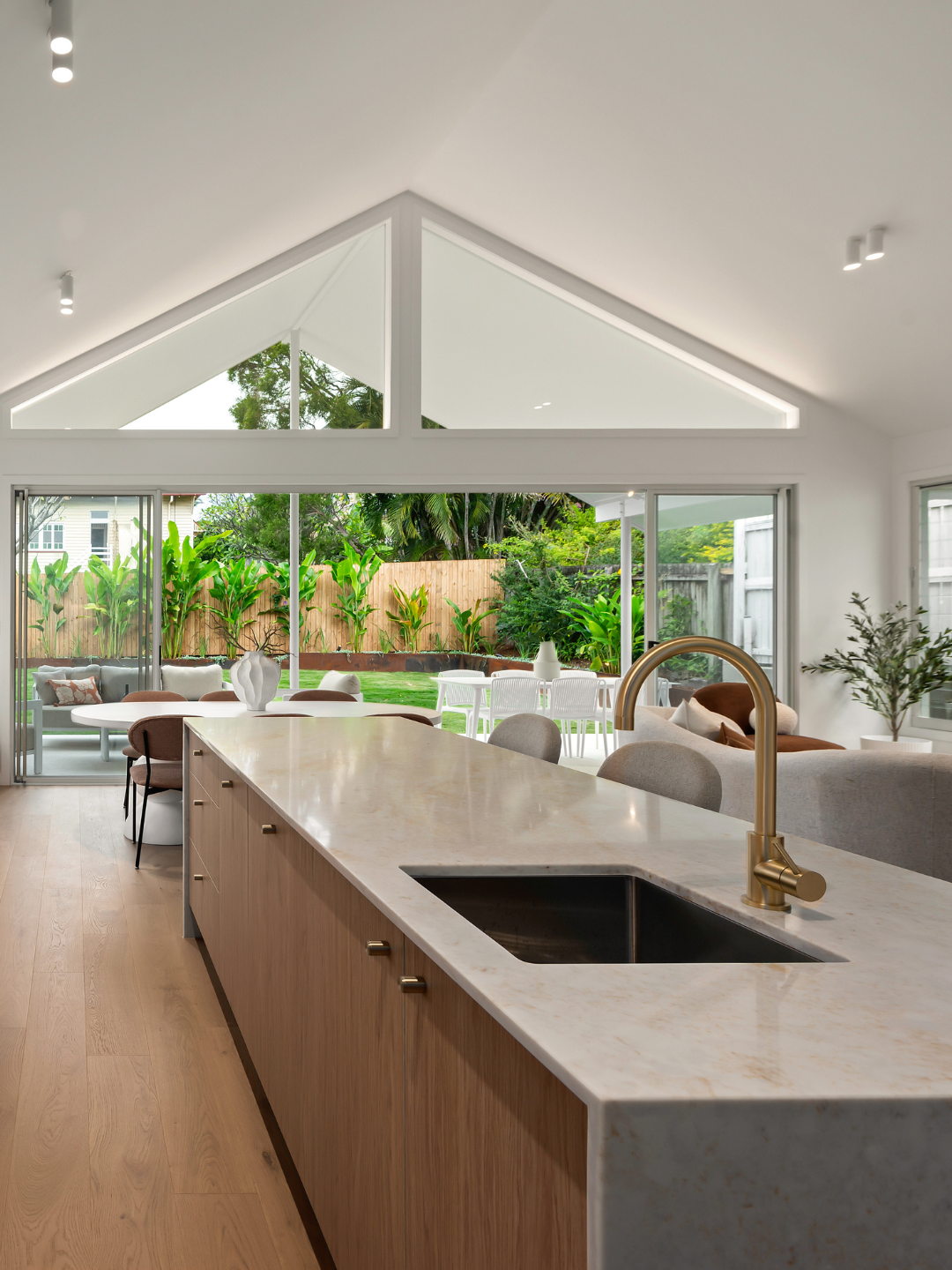
Lighting is worth thinking about early in your renovation or build, ideally before electrical rough in. Take a look at your furniture plan, kitchen cabinetry, mirrors, artwork, finishes and architectural features. Then think about how you'll actually use each room once the sun goes down.
Where will you need clear task lighting? What would you love to highlight? Where would softer light feel better? Could a wall light, pendant or lamp add another layer to the room? Thinking about these details early helps you make more considered lighting choices and gives your electrician a clearer plan to work with when it's time for installation.
It's also a chance to think beyond downlights providing all the light in a room. Today's homes can use a mix of downlights, pendants, wall lights, lamps and integrated lighting to create different layers for different moments.
You don't need to know all the answers yourself.
If you're unsure about placement, which fittings to use or how the different layers could work together, chat to one of our lighting experts. We'll help you work through your plans and create a lighting recipe that suits your home and the way you want to live in it.
So, how many downlights do you need?
There isn't one answer that works for every home, because every home and every household is different.
Think about your rooms, your routines and how you want your home to feel after dark. Then consider where downlights will be useful and where another type of light might do the job better.
The technical details still matter. Beam angle, light output, ceiling height and placement all help refine the final plan. But they come together around your home, rather than forcing your home to fit a formula.
That's the recipe we're looking for. And if you're looking at your plans and wondering whether you've got it right, talk to us.
Our lighting experts can help you work through the details and create a plan that feels right for your home. Then your electrician has a clear, considered plan to bring to life.
Explore our complete home lighting collection or chat to one of our lighting experts when you're ready to start planning.

Layla is a creative at heart, with an Advanced Diploma in Interior Design and being the Senior Marketing and Ecommerce Coordinator here at Yabby she has a passion for staying up to date with the latest trends within the industry. Known for going down a rabbit hole on Pinterest and being a sucker for a good mood board to kick off any project.